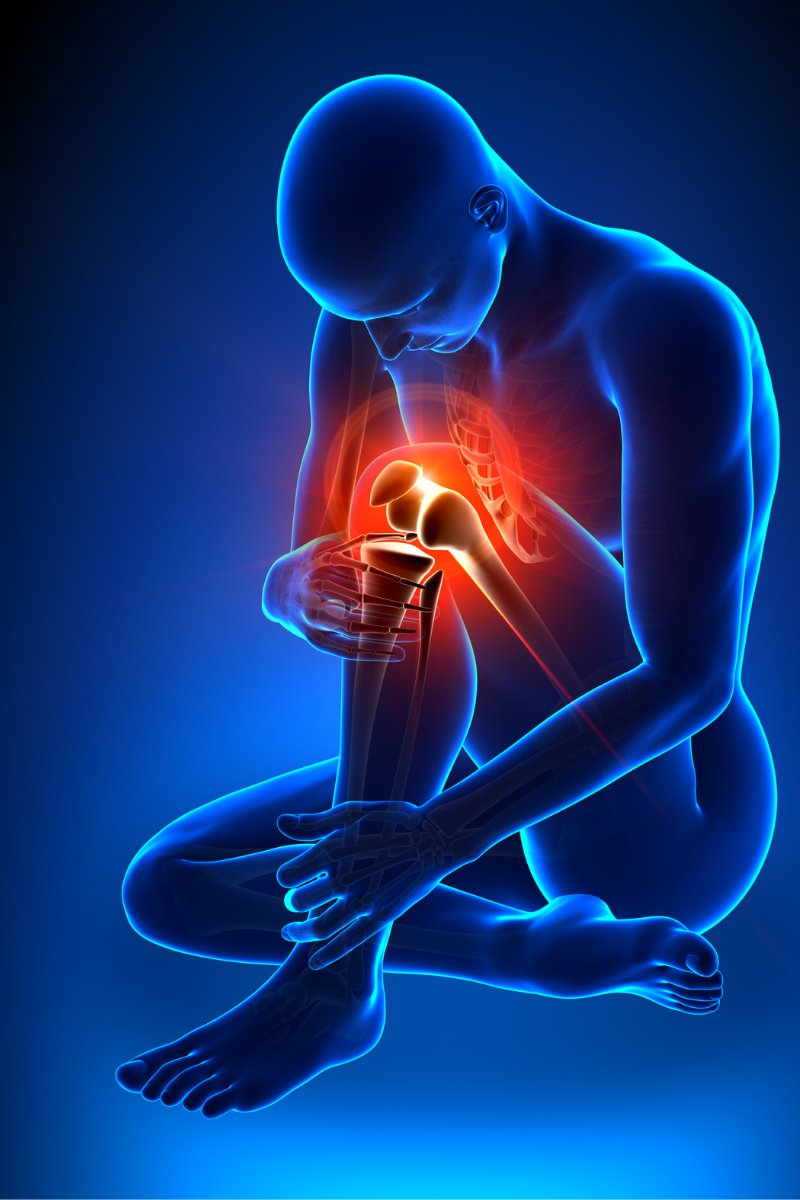
Algodystrophy, currently known as Complex Regional Pain Syndrome (CRPS), is a chronic pain condition that may develop after trauma, a fracture, or a surgical procedure.
It is characterized by intense pain that is disproportionate to the triggering event and is associated with sensory, vasomotor, motor, and trophic disturbances (1–3).
Although relatively uncommon, algodystrophy can lead to significant disability if not managed early and appropriately.
What is algodystrophy (CRPS)?
CRPS is a complex disorder involving:
- central sensitization
- neurogenic inflammation
- dysfunction of the sympathetic nervous system
- motor and trophic alterations (2,3)
Two types are distinguished:
- CRPS type I (without identifiable nerve injury)
- CRPS type II (with documented nerve injury) (2,3)
Diagnosis is based on the Budapest criteria, internationally validated (1).
What causes algodystrophy?
Algodystrophy most commonly occurs after:
- a fracture (wrist, ankle…)
- orthopedic surgery
- trauma
- prolonged immobilization
- more rarely, a direct nerve injury (2,3)
Early diagnosis and treatment significantly improve prognosis (2,5,6).
Treatment Goals
Management of CRPS is not limited to pain reduction alone.
The objectives are:
✔ Reduce pain intensity
✔ Restore function
✔ Prevent chronicity
✔ Limit disability
✔ Improve quality of life (2–6)
International guidelines highlight the effectiveness of a multidisciplinary and multimodal approach (2,5,6).
Pharmacological Treatment of Algodystrophy (CRPS)
CRPS frequently presents a significant neuropathic component. In a Pain Unit, pharmacological treatment is generally based on several therapeutic classes, tailored to the patient’s profile and disease stage. (2,5,6)
1) Neuropathic pain treatments
Medications used for neuropathic pain constitute a common foundation of treatment. Their goal is to reduce nervous system hyperexcitability and central sensitization. (2,3,5,6)
2) Corticosteroids (early stages)
In recent forms, especially when marked inflammation is present, a short course of corticosteroids may be proposed, with potential benefits on pain and disease progression. (2,5)
3) Bisphosphonates
Several studies have shown benefit in pain reduction, particularly in early forms with bone involvement. (10)
4) Ketamine (refractory forms)
In severe CRPS or cases resistant to conventional treatments, intravenous ketamine may be considered. Its use should be supervised by a specialized team due to variable response and potential side effects. (7,8)
Interventional Treatments
When pharmacological treatment and rehabilitation are insufficient, a Pain Unit may offer interventional techniques, selected according to CRPS stage, location, and symptom severity. (2,9)
1) Sympathetic blocks
CRPS may involve dysregulation of the sympathetic nervous system. In selected cases, sympathetic blocks may be proposed:
- stellate ganglion block (upper limb involvement)
- lumbar sympathetic block (lower limb involvement) (2,9)
These blocks may serve both diagnostic and therapeutic purposes in selected patients. (2,9)
Neuromodulation: Reference Option in Refractory Chronic Forms
In chronic, severe CRPS resistant to conservative treatments, neuromodulation represents a validated option capable of improving pain and quality of life. (12–14)
2) Spinal Cord Stimulation (SCS)
Spinal cord stimulation is a well-documented technique in refractory CRPS, with demonstrated benefits in pain reduction and certain functional parameters. (13,14)
3) Dorsal Root Ganglion (DRG) Stimulation
DRG stimulation is a more recent technique, particularly useful in localized CRPS due to its more targeted stimulation. (12)
Rehabilitation: A Fundamental Pillar of Treatment
In CRPS, no treatment can be fully effective without appropriate and progressive rehabilitation. Mobilization is a central component of management and must be introduced in a supervised and individualized manner.
Rehabilitation may include:
- progressive and controlled mobilization of the affected limb
- desensitization techniques
- mirror therapy
- graded motor imagery (6,15)
These strategies aim to restore function, reduce hypersensitivity, and prevent chronicity.
Among them, graded motor imagery has demonstrated effectiveness in some persistent forms of CRPS, improving both pain and function. (15)
Psychological Approach and Biopsychosocial Dimension
Complex Regional Pain Syndrome is not a psychologically caused disease. It is a clearly identified neuroinflammatory and neuropathic condition. (2,3)
However, as with any persistent chronic pain condition, CRPS may be associated with secondary psychological consequences such as:
- anxiety
- depressive symptoms
- catastrophizing
- fear of movement (kinesiophobia) (2,6)
These factors are not the cause of the disease but may contribute to pain maintenance, reduced physical activity, and increased functional disability.
In this context, an approach incorporating appropriate psychological support — particularly cognitive-behavioral techniques, pain education, and stress management — may improve treatment adherence, reduce fear of movement, and promote functional recovery. (2,6)
International guidelines emphasize the importance of a multidisciplinary biopsychosocial approach, combining medical treatment, rehabilitation, and psychological support to optimize long-term outcomes. (2,5,6)
Prognosis of Algodystrophy
Prognosis depends on:
- early diagnosis
- prompt initiation of treatment
- engagement in rehabilitation
- access to a specialized team (2,3,5,6)
The earlier the intervention, the better the outcomes.
Conclusion
Algodystrophy, or Complex Regional Pain Syndrome (CRPS), is a complex, multifactorial, and potentially disabling condition. Its mechanisms combine central sensitization, neurovegetative dysregulation, inflammation, and functional alterations, explaining the challenges in management. (2,3)
However, current scientific evidence clearly shows that early, multimodal, and specialized management significantly improves pain, function, and quality of life. (2,5,6)
Optimal treatment is based on several complementary pillars:
- pharmacological treatment tailored to the neuropathic component
- interventional techniques in selected cases
- neuromodulation in refractory CRPS (12–14)
- progressive and structured rehabilitation (6,15)
- integrated biopsychosocial approach (2,6)
No single strategy is sufficient on its own. Coordination among these interventions within an experienced Pain Unit determines prognosis.
The essential message is clear:
the earlier the diagnosis and treatment initiation, the greater the chances of functional recovery and disability reduction. (2,5,6)
CRPS is not a fatality. With an appropriate and individualized therapeutic strategy, it is possible to reduce suffering, restore function, and sustainably improve quality of life.
Frequently Asked Questions (FAQ)
Can algodystrophy be cured?
In early forms, significant improvement is possible with appropriate treatment. (2,5)
How long does CRPS last?
The course is variable: it may last a few months in early forms and longer in chronic cases. (2,3)
Should movement be avoided?
No. Progressive mobilization is essential in treatment. (6,15)
When should neuromodulation be considered?
In cases of failure of conservative treatments and persistent, disabling pain. (12–14)
Treatment of Complex Regional Pain Syndrome
Bibliography
- Harden RN, Bruehl S, Perez RSGM, et al. Validation of proposed diagnostic criteria (the “Budapest Criteria”) for Complex Regional Pain Syndrome. Pain. 2010;150(2):268–274.
- Bruehl S. Complex regional pain syndrome. BMJ. 2015;351:h2730.
- Birklein F, Dimova V. Complex regional pain syndrome—up-to-date. Pain Rep. 2017;2(6):e624.
- Goebel A, Barker CH, Turner-Stokes L, et al. Complex regional pain syndrome in adults: UK guidelines for diagnosis, referral and management in primary and secondary care. R Coll Physicians. 2018.
- Perez RSGM, Zollinger PE, Dijkstra PU, et al. Evidence based guidelines for complex regional pain syndrome type 1. BMC Neurol. 2010;10:20.
- O’Connell NE, Wand BM, McAuley J, Marston L, Moseley GL. Interventions for treating pain and disability in adults with complex regional pain syndrome. Cochrane Database Syst Rev. 2013;(4):CD009416.
- Azari P, Lindsay DR, Briones D, Clarke C, Buchheit T, Pyati S. Efficacy and safety of ketamine in patients with complex regional pain syndrome: a systematic review. CNS Drugs. 2012;26(3):215–228.
- Schwartzman RJ, Alexander GM, Grothusen JR, Paylor T, Reichenberger E, Perreault M. Outpatient intravenous ketamine for the treatment of complex regional pain syndrome: a double-blind placebo-controlled study. Pain.2009;147(1-3):107–115.
- Forouzanfar T, Koke AJA, van Kleef M, Weber WEJ. Treatment of complex regional pain syndrome type I. Eur J Pain. 2002;6(2):105–122.
- Varenna M, Adami S, Sinigaglia L. Bisphosphonates in complex regional pain syndrome type I: how do they work? Clin Exp Rheumatol. 2014;32(3):451–454.
- Mailis-Gagnon A, Furlan AD, Sandoval JA, Taylor R. Spinal cord stimulation for chronic pain. Cochrane Database Syst Rev. 2004;(3):CD003783.
- Deer TR, Levy RM, Kramer J, et al. Dorsal root ganglion stimulation yielded higher treatment success rate for complex regional pain syndrome and causalgia at 3 and 12 months. Pain. 2017;158(4):669–681.
- Kemler MA, Barendse GAM, van Kleef M, et al. Spinal cord stimulation in patients with chronic reflex sympathetic dystrophy. N Engl J Med. 2000;343(9):618–624.
- Taylor RS, Van Buyten JP, Buchser E. Spinal cord stimulation for complex regional pain syndrome: a systematic review of the clinical and cost-effectiveness literature and assessment of prognostic factors. Eur J Pain.2006;10(2):91–101.
- Moseley GL. Graded motor imagery is effective for long-standing complex regional pain syndrome: a randomised controlled trial. Pain. 2004;108(1-2):192–198.